
Flat Tires, Farm Life, and War Stories: A Masterclass in Everyday "Crisis" Leadership from Aunt Cece
A couple of days ago, I took a road trip with my 92-year-old Aunt Cece.
And if you’ve never spent hours in a car with someone who has lived through nearly a century of history, let me tell you, it’s less of a road trip and more of a masterclass in perspective.
Aunt Cece doesn’t tell stories the way most people do. There’s no setup, no “let me tell you something important.” She just starts talking, usually mid-thought, and suddenly you’re somewhere else entirely.
We were driving past a stretch of farmland when she said, almost offhand,
“This reminds me of when your grandfather left for WWII…”
And just like that, you’re sitting with her, eight years old, one of eight kids, living on Central California farmland with no running water or indoor plumbing, watching her father leave for the Army after the bombing of Pearl Harbor. She didn’t describe fear or panic; she described what happened next.
They worked; everyone had a role, even an 8-year-old girl, everyone contributed, not because someone gave a speech or assigned tasks, but because it was understood. There was no time to figure it out later, no space to wait for direction; they just did what needed to be done.
Looking back, it’s clear that they weren’t just reacting; they were prepared in the way life sometimes prepares you. Roles were understood, expectations were clear, and when disruption hit, they didn’t start from scratch; they moved.
A little while later, she shifted, no transition, no pause.
“Oh, and when we were in Guam, and I had my first baby…”
Now she’s a young mother, her husband serving in the Air Force, deployed to the conflict in Korea, building a life far from home, navigating uncertainty in a place most of us have never experienced. Again, no dramatics, just a steady recounting of what needed to be done and how they did it.
That’s when it hit me.
She’s been navigating crises her entire life; she just never labeled them that way.
What We Call a “Crisis” Today
We tend to think of a crisis as something big, something rare, something that happens somewhere else. But most of the disruption we experience doesn’t look like that.
It looks like a flat tire when you’re already late, a childcare plan that falls through, a road closure that reroutes your entire day, a system outage that stops your team in its tracks. Nothing catastrophic, but enough to throw everything off.
And in those moments, whether we realize it or not, we’re leading.
Not because of a title, but because leadership is influence, it’s the ability to help people move toward a goal when things don’t go as planned.
At some point in our drive, we started talking about her sisters.
All five of them.
She smiled in a way I hadn’t seen yet and said, “Oh, we were something else… people used to call us the Earl Girls.” We could raise a little heck if you know what I mean,” she says with a wink.
The Infamous Earl Girls.
And you could feel it immediately, this wasn’t just a memory, it was her foundation.
She told me stories about them, not the easy ones, not the polished versions, but the moments that change you.
When one of her nephews, just five years old, ran into the street and was hit and killed by a delivery truck, and when one of her sisters unexpectedly lost her husband, life showed up in the most devastating and unexpected ways.
And every time, the response was the same.
They showed up, no formal plan, no assigned roles, no discussion about who was responsible; they just knew who needed to be there, what needed to be done, and how to support each other through it.
They didn’t call it stakeholder coordination, but that’s exactly what it was: a clear understanding of roles, strong communication, shared responsibility, and complete trust.
They didn’t build that in the moment; they built it over the years, through consistency, through showing up for each other long before anything went wrong.
So when something did go wrong, there was no delay, no confusion, no scrambling to figure out who to call.
The system was already in place.
“We always had each other,” she said.
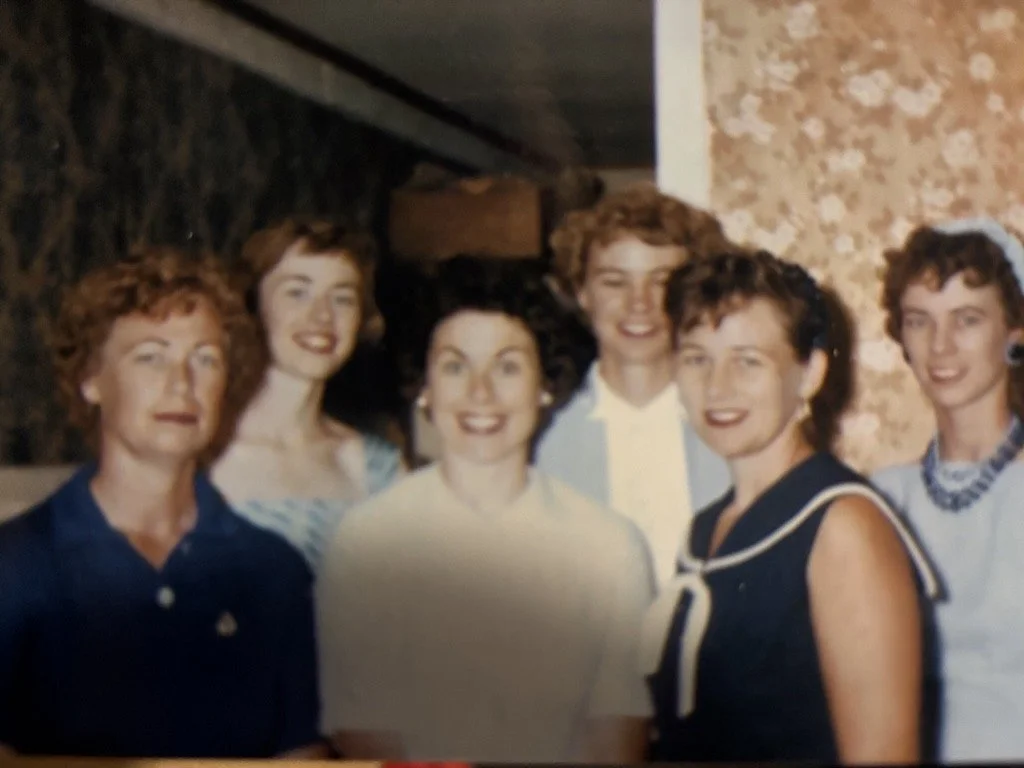
The Infamous Earl Girls- 1952
And in crisis leadership, that’s everything: knowing who your people are, building those relationships early, and creating the kind of trust that holds when things get hard.
What struck me most about Aunt Cece wasn’t just what she had been through; it was how she moved through it.
There was always clarity about what mattered most: people came first; that part was never questioned. You made sure everyone was safe, supported, and accounted for, and then you moved into everything else. That sense of responsibility, that duty of care, was just part of how she operated.
There was also an understanding that decisions had to be made, quickly, often without perfect information, but with a clear sense of priorities, what matters most right now, what needs to happen next, and who needs to do it.
Communication was constant, whether it was letters during the war or conversations around the table; people knew what was happening, they knew where they stood, expectations were clear, and that clarity reduced confusion when things were already difficult.
Plans changed constantly. That wasn’t frustrating to her; it was expected. She adjusted, recalibrated, and kept going, taking in new information, adapting to what was in front of her, and shifting as needed.
And nothing was wasted, every hard moment, every disruption became part of how she approached the next one, refining, learning, improving, even if she never used those words.
At one point on the trip, after we had taken a wrong turn and added an extra hour to our drive, I started to apologize.
She waved it off.
“We’ll get there,” she said, “we always do.”
No stress, no blame, no spiraling, just a quiet confidence built from a lifetime of assessing, adjusting, and moving forward.
It Was Never Called Leadership
We spend a lot of time talking about leadership, defining it, training it, trying to get better at it.
But sitting in that car, I kept thinking, Aunt Cece never managed a team, she never held a leadership title, she never went through training.
And yet, she demonstrated every principle we teach, preparing before disruption, prioritizing people, communicating clearly, making decisions, adapting in real time, engaging the right people, and learning from every experience.
She influenced outcomes, she supported people, she helped things move forward, again and again.
That’s leadership.
So the next time your day gets disrupted, and it will, pay attention to how you respond.
Because leadership in a crisis isn’t reserved for major events.
It shows up in the flat tires, the missed plans, the unexpected turns, the moments where things don’t go the way you thought they would.
And in those moments, the question isn’t whether you’re leading.
It’s how.
As we pulled into our final stop, Aunt Cece looked out the window and said something that’s stayed with me.
“We didn’t think of it as anything special; we just did what needed to be done.”
And maybe that’s the point.
The best leaders don’t always talk about leadership.
They just live it, one moment, one decision, one response at a time.
